roboflow/supervision · error · ValueError
Incorrect connectivity value. Possible connectivity values:
Error message
Incorrect connectivity value. Possible connectivity values: 4 or 8.
What it means
contains_multiple_segments delegates to cv2.connectedComponents, which only supports 4-connected or 8-connected neighborhoods; any other connectivity integer is rejected before the OpenCV call. 4-connectivity counts only edge-adjacent pixels as one segment; 8-connectivity also counts diagonal neighbors.
Source
Thrown at src/supervision/detection/utils/masks.py:283
>>> sv.contains_multiple_segments(mask=mask, connectivity=4)
True
>>> mask = np.array([
... [0, 0, 0, 0, 0, 0],
... [0, 1, 1, 1, 1, 1],
... [0, 1, 1, 1, 1, 1],
... [0, 1, 1, 1, 1, 1],
... [0, 1, 1, 1, 1, 1],
... [0, 0, 0, 0, 0, 0]
... ]).astype(bool)
>>> sv.contains_multiple_segments(mask=mask, connectivity=4)
False
```
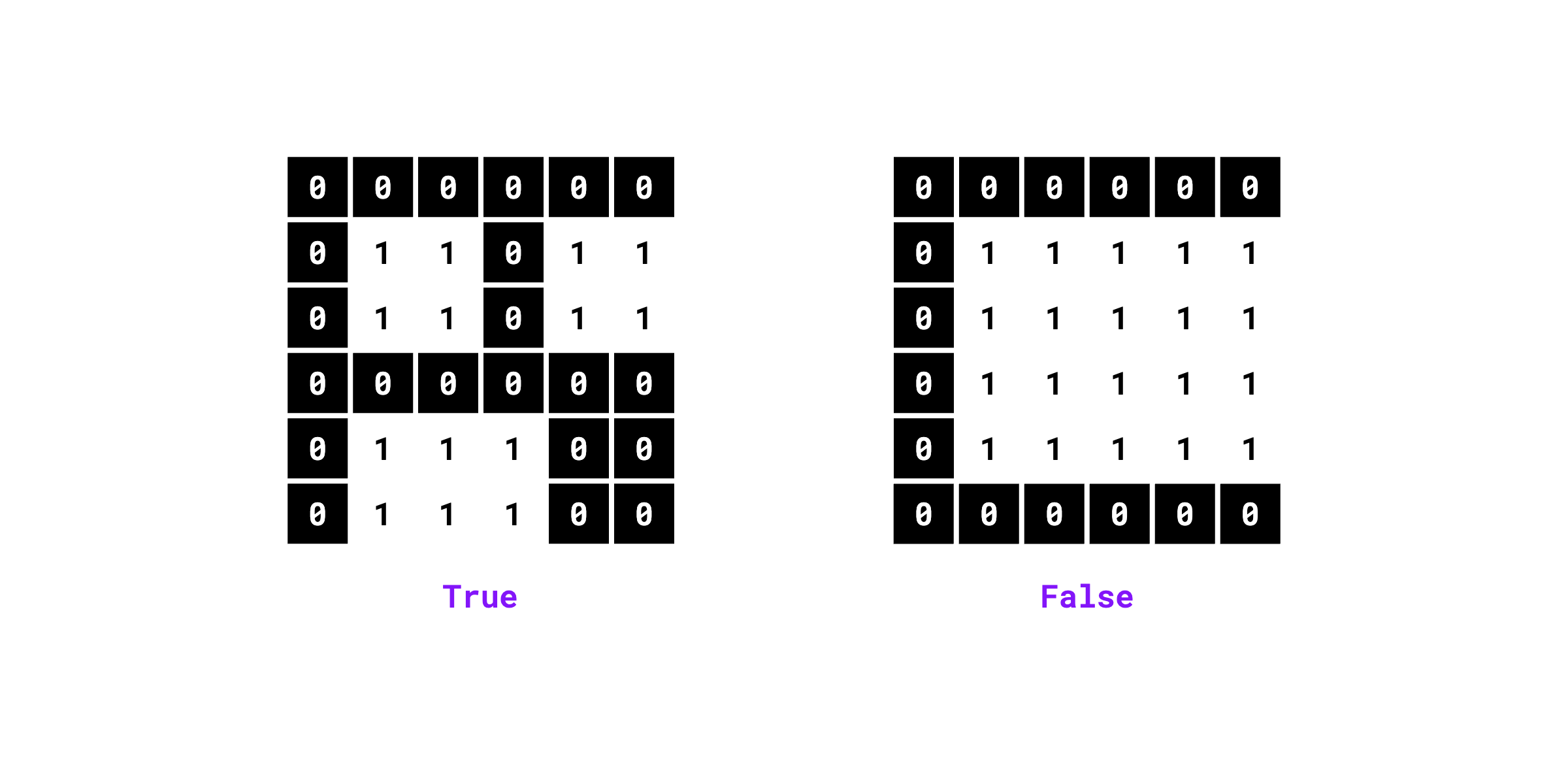{ align=center width="800" }
""" # noqa E501 // docs
if connectivity != 4 and connectivity != 8:
raise ValueError(
"Incorrect connectivity value. Possible connectivity values: 4 or 8."
)
mask_uint8 = mask.astype(np.uint8)
labels = np.zeros_like(mask_uint8, dtype=np.int32)
number_of_labels, _ = cv2.connectedComponents(
mask_uint8, labels, connectivity=connectivity
)
return bool(number_of_labels > 2)
def resize_masks(
masks: npt.NDArray[np.bool_], max_dimension: int = 640
) -> npt.NDArray[np.bool_]:
"""
Resize all masks in the array to have a maximum dimension of max_dimension,
maintaining aspect ratio.
Args:View on GitHub (pinned to 7f254d9784)
Solutions
- Use 4 or 8 as an int; choose 4 for strict edge-adjacency, 8 to merge diagonal neighbors.
- Coerce config/CLI inputs with int() before passing.
- Validate at the config boundary: if connectivity not in (4, 8): raise early with your own message.
Example fix
# before
 sv.contains_multiple_segments(mask=mask, connectivity=int(cfg["connectivity"]) if cfg else 6)

# after
 connectivity = int(cfg["connectivity"]) if cfg else 4
 assert connectivity in (4, 8)
 sv.contains_multiple_segments(mask=mask, connectivity=connectivity)
Defensive patterns
Strategy: validation
Validate before calling
connectivity = int(cfg["connectivity"])
if connectivity not in (4, 8):
    raise ValueError(f"connectivity must be 4 or 8, got {connectivity}")
sv.contains_multiple_segments(mask=mask, connectivity=connectivity)
Type guard
def is_valid_connectivity(value: int) -> bool:
    return value in (4, 8)
Prevention
- Coerce config/CLI values to int.
- Remember OpenCV semantics: 4 or 8, not skimage's 1/2.
- Pick 8 if diagonal bridges should keep a segment connected.
When it happens
Trigger: Calling sv.contains_multiple_segments(mask, connectivity=6) or connectivity=2, or passing a value read from a config/CLI as a string ('4') so the != comparisons always hold.
Common situations: Config value parsed as string instead of int; copying a connectivity number from skimage (which uses 1/2) rather than OpenCV semantics; typo or auto-complete picking an invalid value.
Related errors
- All sigma values must be positive
- color length ({len(color_seq)}) must match sigma length ({le
- mask must be boolean
- Either absolute_distance or relative_distance must be set.
- mode must be 'edge' or 'centroid'
AI-assisted analysis of roboflow/supervision@7f254d9784 (2026-08-15).
Data as JSON: /api/errors/ab0373d3c3553b6a.
Report an issue: GitHub.